

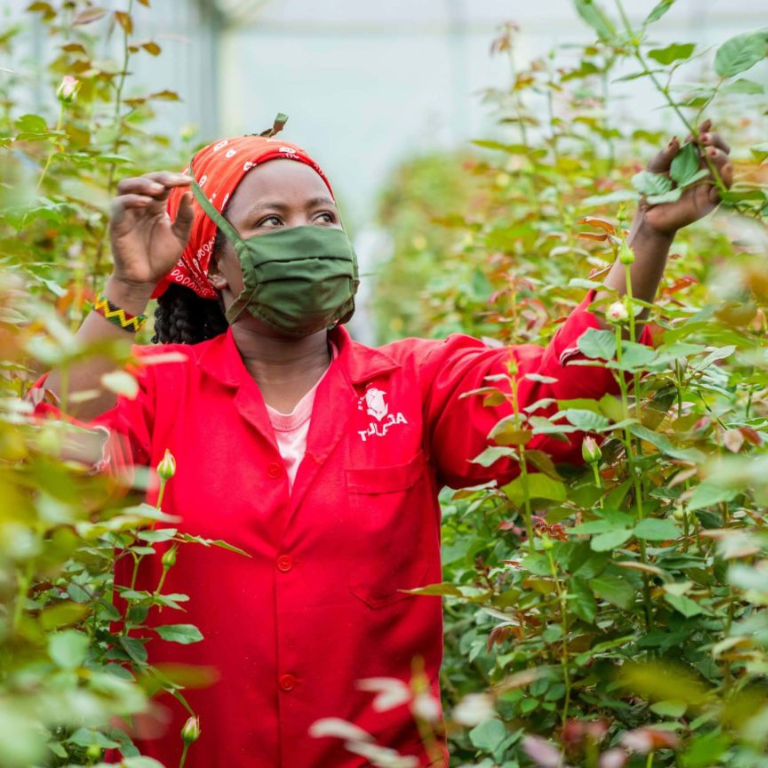


Meet Rebecca: ‘More women are stepping into leadership… when something isn’t right, we speak up’
On Kenya’s flower farms, women make up as much as 70% of the workforce – but most are excluded from leadership positions and opportunities to earn extra income.


This was true for Rebecca Amoth when she first started as a flower farm worker. Focused on providing for her family, Rebecca worked long shifts and picked up extra jobs when she could. Like millions of women globally, she struggled with low wages, lack of childcare, and limited say in workplace decisions. Speaking up or taking on leadership roles didn’t always feel possible – many women around her felt the same.
Things began to change when when she joined Shalimar Flower Farm and took part in the Fairtrade Africa’s Women’s School of Leadership - a programme that brings women and men together, training participants in gender-based violence prevention, sexual harassment awareness, reproductive health, and financial literacy. The inclusion of men was important: it meant the responsibility for creating safer, more respectful workplaces didn’t fall on women alone.


With new skills and more confidence, Rebecca started stepping forward. She became a formal educator for her women colleagues, supporting them to navigate issues they once felt unable to raise. At home, she found ways to grow her income too. After discovering she loved tailoring, she took small Fairtrade-supported loans to buy sewing machines and began repairing uniforms and making school clothes for families in her community. The extra income helped her pay school fees ‘without stress’ and begin ‘building a permanent home.’
Rebecca didn’t stop there. She founded Shalimar’s largest women’s savings group - about 100 members strong - offering budgeting support, lowinterest loans and a place for women to back each other. She feels passionately about how understanding money can transform a household, and how strong families build strong communities.
Today, she sees more women around her raising their voices, taking the lead and imagining futures that once felt out of reach. Her own next step? Launching a small sweatermaking business, not just for herself but also to employ other women.
In Rebecca’s words:
What was your early experience of working in the flower industry?
‘When I started working here, it was common to hear cases of harassment. Women were afraid to speak up, and even more afraid to dream.’
What changes have you seen over the years?
‘Today, more women are stepping into leadership [roles]. And when something isn’t right, we speak up.’
Do you do anything else in addition to flower farming?
‘Now I repair work uniforms for my colleagues and sew school uniforms for clients in the community. I’ve paid school fees without stress. I’m even building a permanent house back home.”
Why does helping other women to manage their finances mean so much to you?
‘Most people don’t know how to manage their money. That’s where so many families struggle. If we fix these gaps at the household level, then we build stronger families, stronger communities.’
What are your dreams for the future?
‘I want to start my own sweater company – but, more than that, I want my peers to be part of it.’

