

Why we do it
Millions of farmers and workers face unfair prices, unsafe conditions and limited opportunities — and that’s why Fairtrade exists. We’re here to challenge injustice in global trade and build a system that puts people and planet first.

Every product we buy has a story—of the people who grew it, picked it, stitched it, or packed it. At Fairtrade, we believe those stories should be rooted in dignity, fairness, and opportunity. That’s why we work alongside farmers and workers across the globe to challenge exploitation and transform trade. By choosing Fairtrade, you're not just making a purchase—you're joining a movement that puts justice at the heart of everyday decisions.
Child protection
Child protection is a key issue for Fairtrade, as child labour unfortunately remains commonplace in the agricultural sector, especially in communities who hardly earn a living income.
UNICEF estimates that 160 million children around the world are engaged in work that threatens their health and safety or interrupts schooling – 70 percent of them in the agricultural sector.
Child labour refers to work – paid or unpaid – which harms a child’s health and wellbeing, their education, leisure or development. It involves both boys and girls, and in some regions such as sub-Saharan Africa, more than one child in four aged five to 17 are engaged in child labour. The causes are multi-faceted and complex, but poverty remains the key driver.
The Fairtrade approach to child protection is human rights-based and inclusive, and targets direct root causes.

Climate and the Environment
Our climate and nature are in crisis. Millions of farmers, workers, their families and communities already live with the impacts of climate change, extreme weather and biodiversity loss. Fairtrade works to address this.
A sustainable environment should be the norm. However, the severity, frequency, and intensity of meteorological events have been rising and affecting livelihoods worldwide.
Agricultural communities, whose livelihoods depend on farming, stand to lose income. Higher temperatures, drought, floods, storms, crop diseases, soil depletion and deforestation threaten future food security worldwide.

Deforestation
Deforestation is a driver of climate change and contributes to loss of biodiversity. The Fairtrade Standards have built-in forest protection requirements that meet or go beyond what is required in European Union regulations. What's more, Fairtrade offers support and financial benefits to producers – and works to tackle root causes of deforestation such as poverty – so they can play their part to farm sustainably and conserve forests.
Healthy forests are not just good for the planet, through their important role in carbon sequestration and reducing greenhouse gases in the atmosphere. Forests also contribute to soil and water protection, support diverse animal and plant life, and serve as home to indigenous populations. Forests are essential to the livelihoods of more than 1.6 billion people around the world.

Decent Livlihoods
In a world where farmers are often not able to cover basic needs like housing and food with their earnings - despite growing the crops that drive supply chains worth billions on the global market – being able to earn a living income or living wage is an urgent matter to address.
Fairtrade is actively working to support farmers and workers achieve incomes that enable them to live dignified lives—a fundamental right endorsed by the United Nations for seven decades.
However, despite this recognition, countless individuals in producing countries continue to struggle with incomes that barely cover the costs of essential necessities.

Fairtrade and the Sustainable Development Goals
The Sustainable Development Goals aim to end poverty “in all its forms, everywhere”, while leaving no one behind. This ambition is central to Fairtrade’s mission.
The Sustainable Development Goals (SDGs) – adopted by the United Nations General Assembly in September 2015 – are an ambitious set of 17 overarching global goals to combat poverty and achieve sustainable development by 2030. Covering topics from gender equality to climate change, and education to clean drinking water, they represent a powerful opportunity to improve the lives of the 1.3 billion small scale farmers and agricultural workers upon whom the world depends to produce our food and protect our planet.
The ambition is laudable, but there is still a long way to go to achieve many of the goals. Despite progress, more than 780 million people live below the international poverty line. Worldwide, 160 million children are still involved in child labour. And climate change threatens to reverse progress on all levels. What’s more, the goals only provide a framework. It’s up to governments but also businesses and civil society to take action to ensure they are achieved.

Gender Equality
Striving for gender equality is integrated in all facets of our work—from standards to programs and research. Trade cannot be fair unless it includes people of all genders.
In spite of generations fighting against it, gender inequality remains a massive obstacle and is still very much engrained in society today.
For example, though women make up the majority of people producing food, they rarely receive their share of the benefits of their hard labour.

HREDD
Fairtrade works to support farmers and workers, foster responsible business conduct and induce policy reforms that protect human and environmental rights – in order to mitigate human rights risks in global supply chains.
Human Rights and Environmental Due Diligence (HREDD) is a company’s responsibility and means managing the social and environmental risks and harms linked to its business. If conducted properly HREDD can be groundbreaking in advancing farmers’ and workers’ rights and environmental sustainability.

Smallholder Farmers
Fairtrade strives to support small-scale farmers and workers around the world. We work with nearly 1,900 producer organisations, representing almost two million farmers and workers.
Smallholders are small-scale farmers who manage areas varying from less than one hectare to 10 hectares which is managed at family level. It is used in part for production and to cover family needs.
This also means that they compete in a global market to sell their produce. Where the benefits of trade are unevenly distributed. At the start of global supply chains, smallholders in regions like Africa, Latin America, Asia or the Middle East are facing challenging conditions, less bargaining power and precarious livelihoods. They are also hit hardest by the consequences of climate change.

Worker's Rights
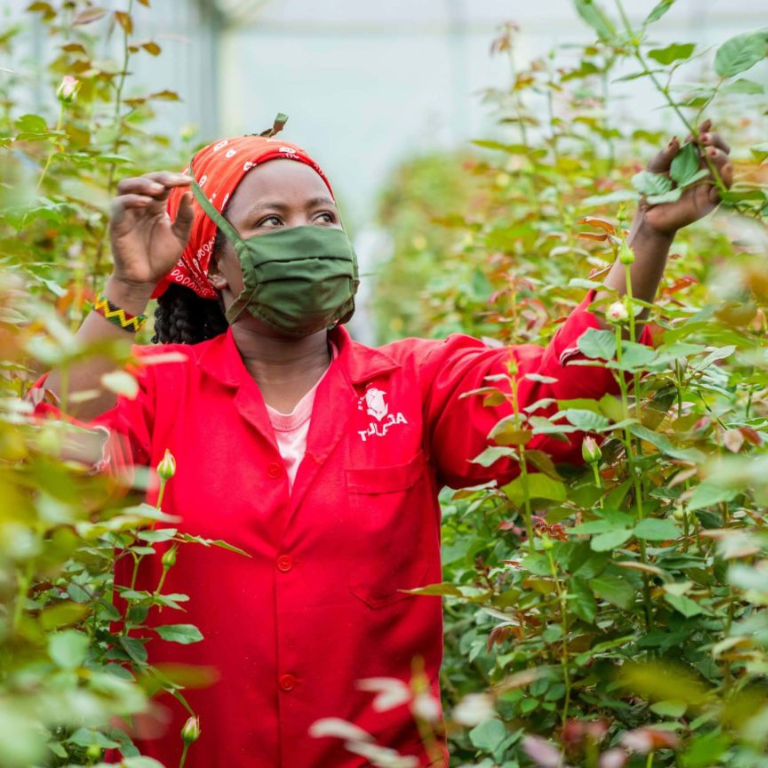
In a world driven by consumer demands and global supply chains, workers are often left behind. Fairtrade works together with and for workers to address deeply rooted challenges.
Fairtrade supports workers through strong standards, by partnering with labour organisations across the world and helping create a market that prioritises ethical sourcing.
Because workers deserve better wages, safe working conditions, and the ability to plan ahead and invest in their communities. It is simply fair.

Forced Labour
Slavery was supposedly abolished years ago. Yet today millions of people worldwide are exploited to do work against their will. Fairtrade works to address this unacceptable practice.
Modern day slavery includes forced labour which is any work that is performed involuntarily and under the threat of punishment. This includes slavery or slave-like practices, debt bondage, as well as human trafficking.
An estimated 40.3 million people are in modern slavery, including 24.9 million in forced labour and 15.4 million in forced marriage. Women and girls are more at risk than men or boys. Migrant and vulnerable groups are often also targeted. The vast majority are exploited by individuals or businesses, many of them in agriculture or construction work.
Poverty is one of the main causes of forced labour as well as a lack of labour in the agriculture sectors, decent employment opportunities and discrimination. It is often well concealed, and in some countries ingrained after years of exploitation.
